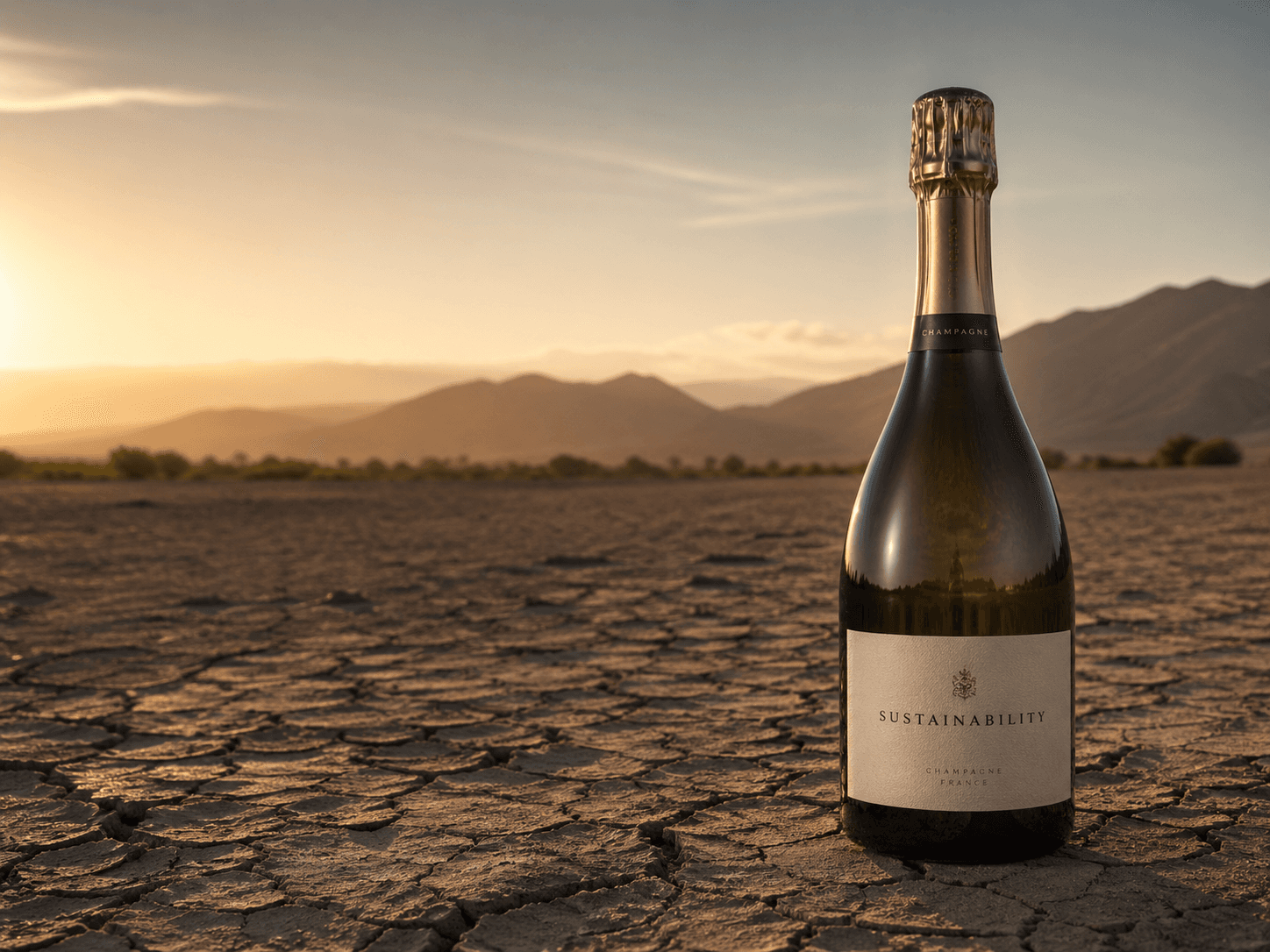
The Ground Beneath the Bubbles
Climate change is the defining challenge of the Champagne region and one of the most consequential, least told stories in fine wine.
Average temperatures in the Champagne region have risen by approximately one degree Celsius over the past fifty years. That may sound modest, but in viticulture, a single degree reshapes everything. Grapes are ripening earlier. Sugar levels are increasing. The natural acidity that gives Champagne its signature tension and longevity is under quiet but consistent pressure. The harvests that once defined a great vintage are arriving weeks ahead of where they stood a generation ago.
The Climate Reality
Average temperatures have risen 1.7°C since 1950. Harvests have moved forward nearly three weeks. The cool, marginal cli…
The Circular Economy
The Champagne industry generates significant environmental impact: heavy glass, elaborate packaging, water intensive win…
Sustainable Viticulture
The shift toward certified organic and biodynamic viticulture has accelerated substantially over the past decade. Smalle…
Emerging Technologies
Technology is transforming both the challenge and the response to climate change in Champagne. Several categories of inn…
The Conscious Consumer
Gen Z is the first generation to make sustainability a primary purchasing criterion rather than a secondary consideratio…
Producer Sustainability Profiles
Independent assessments of certified practices and stated commitments. Transparent about gaps as well as achievements.
The first Champagne house to convert entirely to biodynamic farming. Jean-Pierre Fleury began the transition in 1989, decades before sustainability became an industry conversation.
Aurélien Laherte converted the estate to organic farming in the early 2000s, driven by a conviction that soil health is the foundation of wine quality. Cover cropping, indigenous yeasts, gravity flow winery.
Jean-Baptiste Lécaillon has converted Roederer's 240 hectares of estate vineyards to biodynamic farming, an extraordinary commitment at scale from one of the region's great houses.
Among the first grandes maisons to acquire English vineyard land in Kent, Taittinger has made climate adaptation central to its long term strategy, hedging geographically while improving practices at home.
Climate & Sustainability is an editorial pillar of The Champagne Companion, not a category. Every producer profile, every vintage report and every regional story is understood through this lens. Coverage is independent. No producer pays for inclusion or influences how their sustainability practices are assessed.